
“The Metaverse” is a phrase often thrown around in the technology world (and even beyond), but it is rarely defined. Is the metaverse a specific place? A collection of places? Is it some sort of video game, or is it supposed to be a new, digital world for us to “live” in? Many people are left confused as to what the metaverse really is, and with so many corporations creating their own definitions, it only adds to the murkiness.
Defining the Metaverse
Ironically, the metaverse itself doesn’t truly have one specific definition, but one of the best ways to describe it would be as a digital world (or if you want to get more specific, multiverse). Think of the world we live in today. Could you give it a one- or two-sentence definition that captures every part of it? It’s a bit difficult to do since our world is so complex and is made up of so many moving parts. This is why it is so difficult to truly define the metaverse.
“Advocates from niche startups to tech giants have argued that this lack of coherence is because the metaverse is still being built, and it’s too new to define what it means”; adding to the complexity, it is debated as to whether certain online games, like Roblox, Fortnite, or World of Warcraft, could be considered part of the metaverse since they are online “worlds” that people can interact in (Ravenscraft).
It may even be easier to describe by using a completely different word. If you “replace the phrase ‘the metaverse’ in a sentence with ‘cyberspace’”, it may become a bit clearer on what the metaverse aims to be (Ravenscraft). As it currently stands, the metaverse is not just “one thing” nor does it have just one function or purpose. What each of the parts of the metaverse have in common, though, are that they are all, at least partially, digital.
The metaverse makes use of “technologies such as virtual reality (VR), augmented reality (AR), [Artificial Intelligence (AI)], social media and digital currency” (Needle). If you do not enjoy VR or AR, you are not forbidden from “visiting” the metaverse; it “doesn’t require that… [metaverse] spaces be exclusively accessed via VR or AR” (Ravenscraft). You can access different “worlds” of the metaverse through your device without needing to purchase specific equipment like a VR headset.
So, for the time being, we can at least define the metaverse as a digital world (or multiverse). Whether any digital world can be considered part of the metaverse is up for debate.
What Can You Do in the Metaverse?
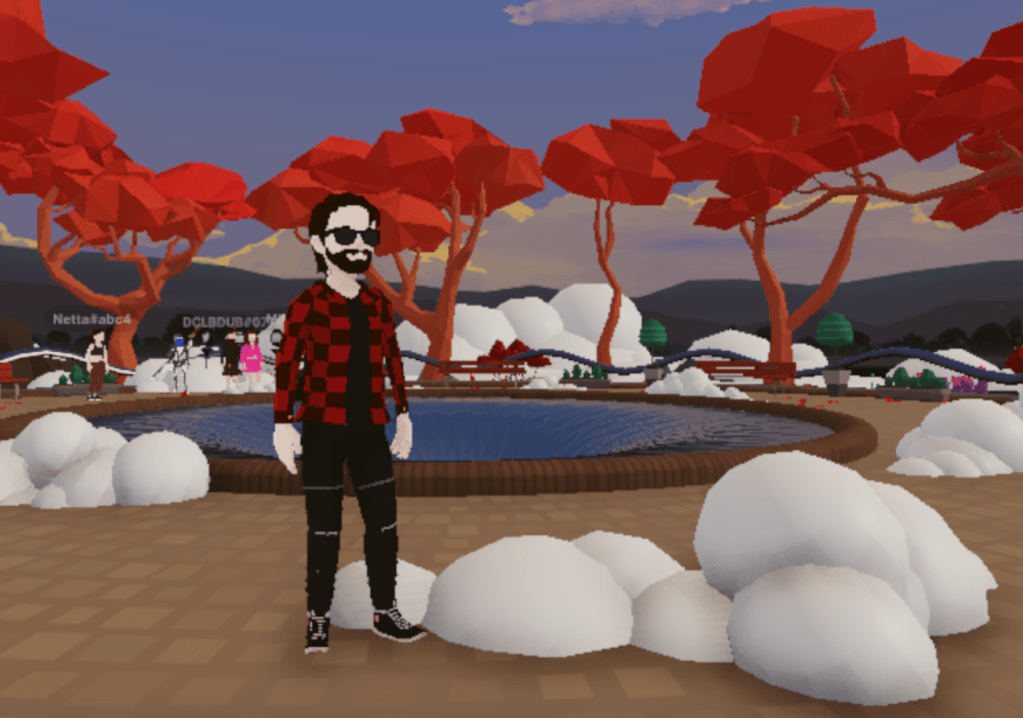
One of the difficulties of truly defining the metaverse is that there are so many different things you can do within it. In some “worlds” in the metaverse, you simply can explore through digital plots of land that people “built” various artworks, buildings, or homes on. In others, you are essentially playing your standard online role-playing game: completing quests, leveling up, and hanging out with friends. Some people even market digital products in the metaverse; “digital currency is used to buy clothes — or weapons and shielding in the case of video games — and many other items” (Needle). Usually, these digital currencies are one of many cryptocurrencies, but this may not always be the case.
So, if you buy a piece of digital property and buy digital furniture, what exactly do you get in return? You get something called an NFT, which stands for Non-Fungible Token. NFTs themselves are incredibly complex and often misunderstood and would best be described in an article all to themselves. Essentially, “an NFT can represent a piece of art, a song or digital real estate. An NFT gives the owner a kind of digital deed or proof of ownership that can be bought or sold in the metaverse” (Needle). So, just like you get a receipt when you make any sort of purchase, you get an NFT whenever you purchase a digital object in the metaverse. This is important since the object or land is not physical whatsoever; it is all digital. The only way you can truly “prove” that you own this digital object is through an NFT.
Is the Metaverse the Next Internet?
So, does this mean that the metaverse is going to replace the Internet at some point? No. “The metaverse doesn’t compete with the internet — it builds on it” to be more interactive and life-like than ever before (Needle). For example, you may be able to go to a digital library in the metaverse and “search” for a book through a service on the Internet and it will appear as a book in your hands instead of just words on a screen.
Many consider the metaverse as “a next evolution of the internet. It will take many forms, including gaming, online communities and business meetings where people collaborate via a digital facsimile or avatar of themselves” (Needle). This is likely all a long way off, however.
Is the Metaverse the Future?
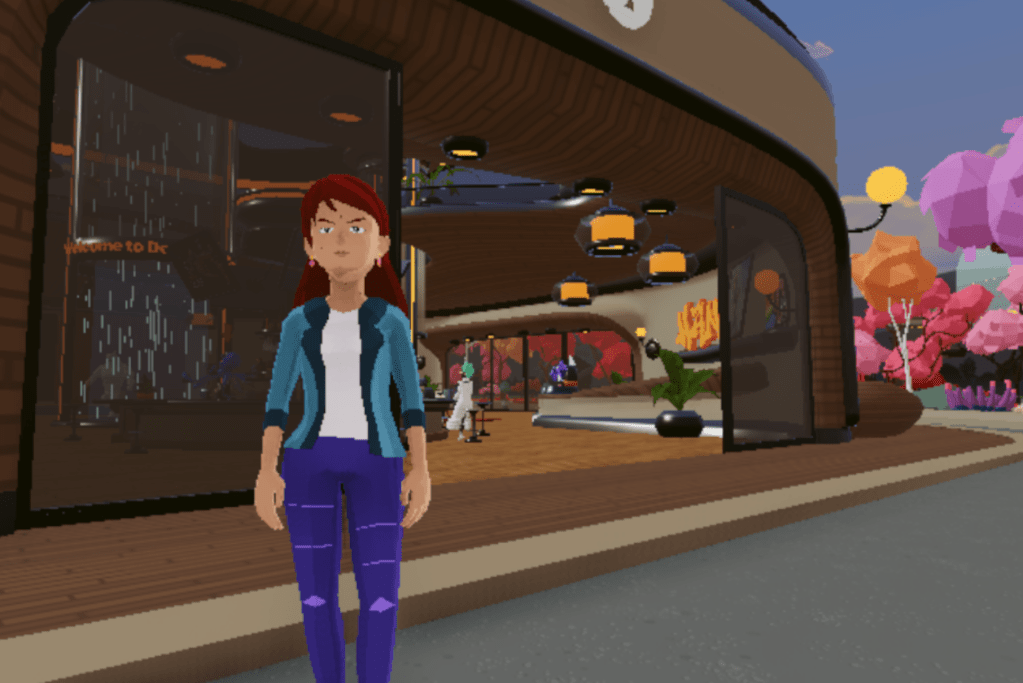
It is important to note that “a true metaverse where lifelike interactions are possible is still years away”, if not decades (Needle). At its current state, the metaverse is still extremely new and definitely needs a lot more work before it can truly stand up on its own as an extension of the Internet.
Ideally, in the metaverse, you can take virtual clothing, artwork, or furniture from one world to another with little to no issue. However, “this is harder than it sounds. While some advocates claim new technologies like NFTs can enable portable digital assets, this simply isn’t true, and bringing items from one video game or virtual world to another is an enormously complex task that no one company can solve (Ravenscraft)”. To elaborate, the digital world is based upon code, and for something to exist within a given digital world, there must be some sort of code for it. It is difficult to have every single digital asset coded into every single metaverse world, and similarly it is difficult to have the code of a digital asset be portable (this is due to many factors: code may be flawed or not valid under certain standards, it may be written in a different programming language than the one the world uses, or it may be inefficient to do).
Thus, for now, the metaverse resembles more of a loose collection of “videogame-esque” worlds that users can explore and interact in through a variety of devices. Will it one day be fully realized, with every digital world connected into one big metaverse galaxy? Only time will tell.
Resources & Further Reading
Needle, David. “The Metaverse Explained: Everything You Need to Know.” WhatIs.com, TechTarget, 3 Oct. 2022, https://www.techtarget.com/whatis/feature/The-metaverse-explained-Everything-you-need-to-know.
Ravenscraft, Eric. “What Is the Metaverse, Exactly?” Wired, Conde Nast, 25 Apr. 2022, https://www.wired.com/story/what-is-the-metaverse/.



 The H.A.C.K.E.R. Project
Leave a comment