Disclaimer: The opinions expressed in this article do not reflect the views of The H.A.C.K.E.R. Project and are simply those of the author.
Technology continues to advance and provide many quality-of-life improvements for us. Tasks that used to take hours can be simplified to minutes, we can reach people around the entire planet and talk to them as if they were in the same room as us, and ever-expanding worlds of entertainment and knowledge are nearly always at our fingertips. In one word, it is marvelous.
However, others are a bit skeptical and concerned as to how much technology is truly benefitting us (which is healthy; going through life without any skepticism or concern can be dangerous). In addition, some worry that the rise in technology will bring about the end to certain things as we know it. For example, it seems rare in today’s world to write out a letter by hand, send it away to someone through the mail, and wait days, weeks, or months for a response when we can simply send them a text or email instead. But what about books? After all, if we wanted to read something, we can simply look it up online or purchase an eBook to browse at our leisure on our phone or tablet. Alternatively, we can turn to audiobooks (some may argue, however, that an audiobook isn’t as much “reading” as it is being “read to”). College students can even rent online eBooks instead of needing to carry around massive textbooks to their classes. With these possible advantages to digital books over physical copies, one must wonder: will books ever be replaced by technology?
Before I begin, I want to note that none of the following reasons are based on any sort of research or experiments. They are simply my own personal thoughts as well as the thoughts of some of my friends and colleagues.
The Feeling of Reading a Physical Book
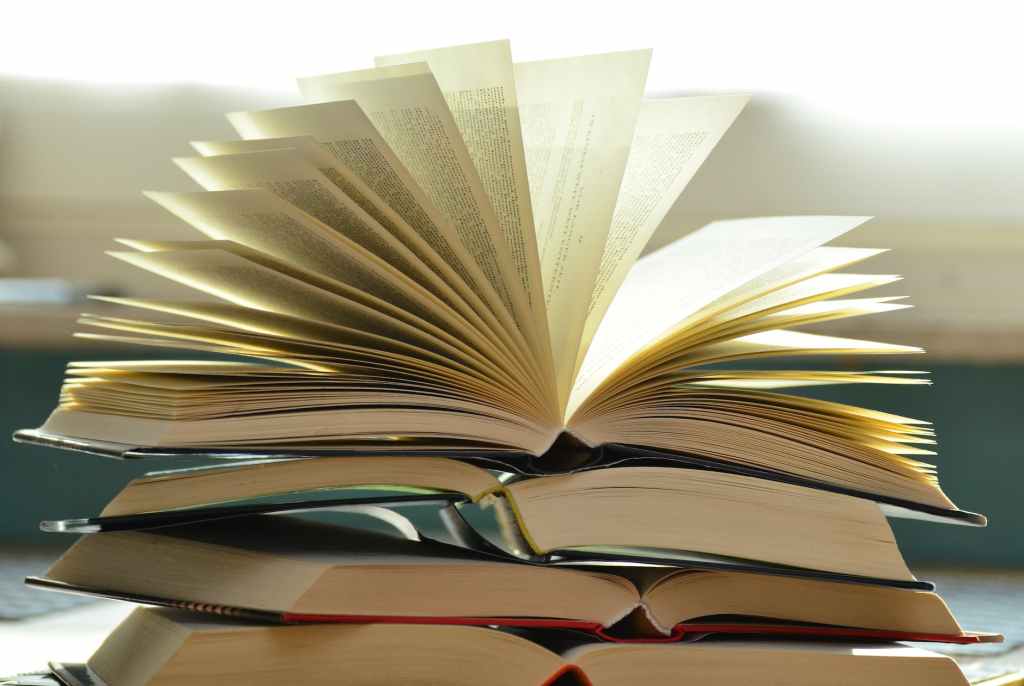
Personally, I don’t think that technology can ever truly replace books in as large of a sense as some people would think. One of the biggest reasons I believe this is because of how it feels to actually read a physical book. Avid readers would likely agree that the feeling of cracking open a brand-new book is wonderful. It feels as if you are opening the door to a new world for the very first time. On the opposite end of the spectrum, opening up an older book is equally as pleasing, since you get to enjoy the classic “old book smell” of aged paper and ink.
Not only that, but I believe that reading a physical book brings with it a larger sense of accomplishment than reading a digital counterpart. When reading digitally, you are either scrolling endlessly or clicking between pages, which after a while starts to go by unnoticed. The scale of how much of a work you have read is simply based on the page numbers (e.g., Page 227 of 452). But, with a physical book, you can actually see just how far you have read; you can watch, after each reading session, the bookmark slowly (or perhaps quickly!) makes its way through the book. This, to me, seems like a more rewarding experience, especially if the book is quite large. After reading that last chapter and closing the book, you can look back and marvel at just how many pages you had read.
Beyond just a singular book, many people enjoy viewing a bookshelf full of novels, texts, and other works of literature. Something about that sight is captivating. In addition, if you only buy digital texts, you sometimes miss out on the wonderful illustrations on the covers of physical books. While there may be a digital image of the cover artwork, being able to observe it up close in a physical manner can be a much more enjoyable experience than staring at an image on a screen. Finally, in some cases, you may not actually “own” the digital book, either; rather, you own the right to view it, which could technically be revoked or removed, depending on circumstances. Purchasing a physical book, however, ensures that you get to keep it.
It Can be Easier to Read
Reading text on a computer or phone screen gets dull and tedious; do it for too long, and you may find that you see letters even when you close your eyes. But, with a physical book, the sensation is different. You aren’t simply staring at a screen; you are actively observing what is written and physically turning the pages as you go. To me, it seems that it captures the attention in a different, indescribable, and addicting way. Of course, I must mention that, if the book is not of interest to you, reading it physically or digitally may seem to make no difference, or if the reading is required (i.e., you have to read it for a class), it may not feel as captivating. However, it seems that it is much easier to start mindlessly scrolling on an eBook than it is to start mindlessly flipping the pages of a physical book.
With a digital book, you can scroll endless amounts of pages while staring at the screen, not actually reading but more or less skimming, until you suddenly realize that you don’t actually recall any of what you just read. Then you must undertake that long journey back up to where you last remember actually paying attention. With a physical book, however, there are generally limits to how far you can mindlessly go before you catch yourself. This is because you have to manually turn the page; sure, you may have skimmed everything on the page, but you realize this much more quickly and have a lot less to re-read in the end.
Books Can Be More Accessible than eBooks
In addition to the above, it is possible that, in some areas, it is much easier for someone to get access to a physical book than it is to get access to an eBook. In many cases, eBooks require an electronic device (and sometimes a specific application), and thus it may not be feasible for everyone to afford such a device. A regular book, however, is often much cheaper. Not only that, but, if one has access to a library, they are able to peruse and borrow a wide variety of books, often spanning many genres, themes, and time periods.
Counterargument: Technology Preserves Literature
However, it is important to note that one of the key features of technology is data preservation. Many works, both modern and classical, have been typed up and stored in digital format to be protected and maintained. For example, Project Gutenberg is an archive of thousands upon thousands of digitized texts, and this website helps to preserve historical literature and make it accessible to wide audiences. In this sense, technology is aiding in the preservation of various works of literature, which is a wonderful thing. I personally do not see it becoming a full replacement, though, especially since having digitize copies of books allows for them to be reprinted.
Counterargument: eBooks Might Be Better for the Environment
In addition to preservation of literature, I must concede that it is possible that eBooks might aid in reducing the environmental impacts that result from creating physical books. In order to create a physical book, trees or other plants must be harvested in order to create paper, which can have negative consequences for the environment (especially depending on whether sustainable logging and forestry practices are used). This is not the case for a digital text; while resources may need to be spent to keep the data online, it may, overall, be less taxing for the environment than producing traditional books. Of course, this is all speculation and likely deserves a more scientific approach.
Counterargument: eBooks Can Be More Accessible than Books
Finally, while books may be less expensive and an easier to obtain option for a general audience, they are often not as accessible for visually impaired audiences. Thus, eBooks can allow for people with visual impairments to enjoy the stories and literature in a more accessible manner (since eBooks usually are able to be read with a screen reader). Just as I do not think that technology will be the end to books, I do not believe this is a reason to work against eBooks in favor of preserving the age-old tradition of printed material.
Final Thoughts
Overall, I don’t foresee physical books being replaced entirely by technology any time soon. As seen in the famous work Fahrenheit 451 by Ray Bradburry, physical books will almost always find a way to persist. Rather, if anything, technology aids in making books more accessible to wider audiences and will allow books to continue to persist far into the future.

 The H.A.C.K.E.R. Project
Leave a comment