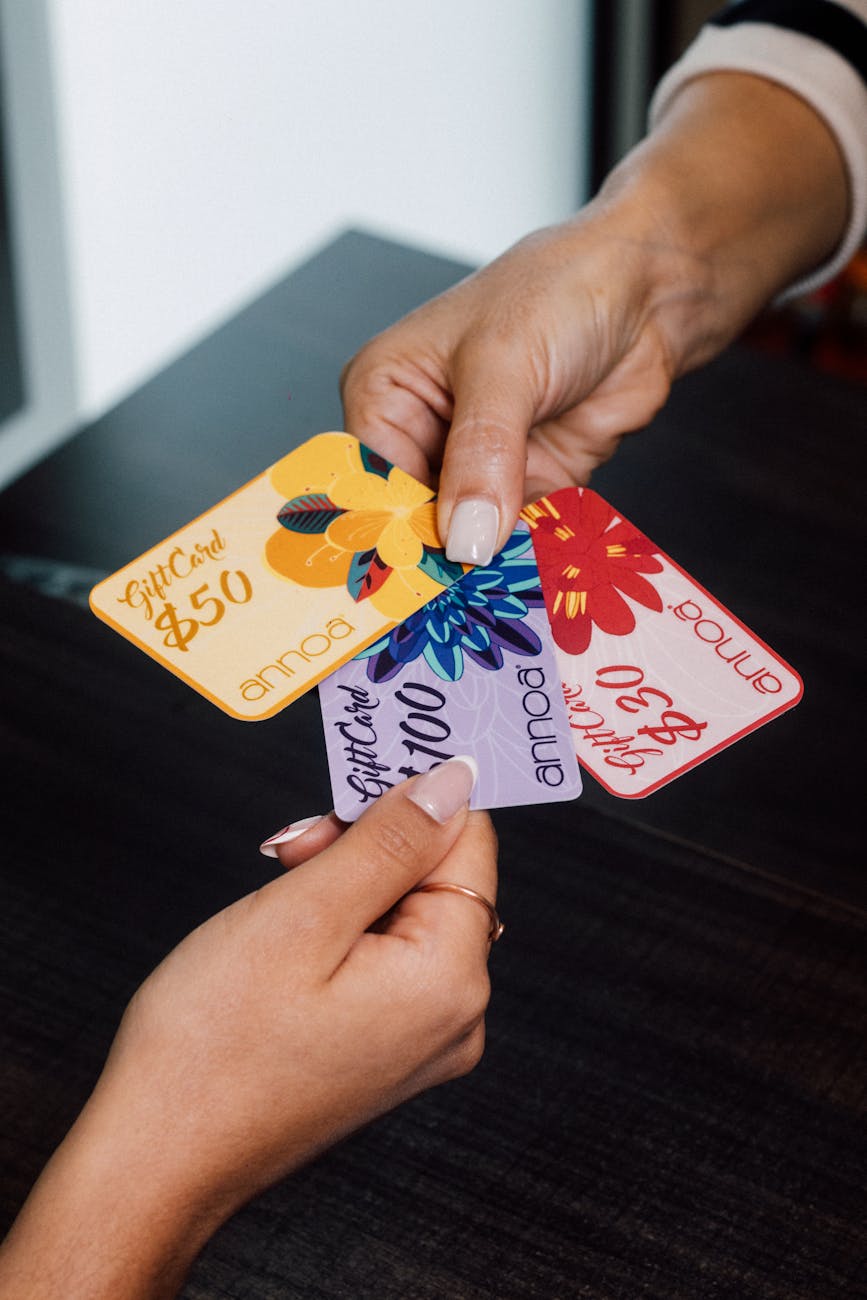

Imagine you receive a phone call from someone who claims to be from your utility company. They tell you that, due to a missed payment, your services will be shut off immediately and you will receive a hefty late payment fine. Fortunately, they can help prevent that; all you have to do is go to your local store, purchase a gift card, and then read them off the numbers in order to make your payment. Little do you know that the individual on the other end of the phone is a scammer.
This is, unfortunately, a real situation that “slightly more than a third (34%) of U.S. adults” have encountered (Sauer). This is known as a gift card scam, and it works just like the above example. A scammer contacts you, claims they need funding for one reason or another, and then coerces you into buying a gift card and providing them the card numbers. Once they have the numbers, they drain the card of funds, leaving you with just a piece of plastic. Of the approximately 34% of U.S. adults who have encountered this sort of scam, approximately “a quarter (24%) of them followed through by purchasing gift cards in response to the request” (Sauer).
As noted by the Federal Trade Commission (FTC), “Only scammers will tell you to buy a gift card, like a Google Play or Apple Card, and give them the numbers off the back of the card. No matter what they say, that’s a scam. No real business or government agency will ever tell you to buy a gift card to pay them”. If you believe that someone is trying to scam you in this way, it is best to cut communication with that person (hang up, delete the email, etc) and then contact the business or agency directly; make sure you do not simply call back the number the scammer used!
One of the quickest ways to spot a gift card scam, other than the request itself, is the urgency the scammer places on the call. Scammers will explain that you need to “pay them right away or something terrible will happen. They don’t want you to have time to think about what they’re saying or talk to someone you trust” (FTC). Always get a second, or even third, opinion, especially if the person on the line is being pushy and forceful in getting you to cooperate.
Why Do Scammers Use Gift Card Scams?
Gift card scams are popular among scammers due to how gift cards are “quick to buy, easy to spend or transfer, and utterly untraceable. If a scammer can successfully trick you into sending them a gift card code, there’s very little you can do to get the value back” (Birchall). Many stores offer gift cards as part of their merchandise; these may be for that particular store, for other locations, for restaurants, for online games, or even cards that are preloaded with a set amount of money that can be used like a regular debit card. They are extremely easy to buy and are almost always activated once the purchase has been made. Then, all a scammer needs is the card number; once they have that, they may drain the card of its balance or keep the card numbers to resell online. Scammers “will say almost anything to get you to buy gift cards — like Google Play, Apple, or Amazon cards — and hand over the card number and PIN codes” (FTC).
Fortunately, as a result of how simple these scams are to pull off, some store employees are trained to warn people who appear to be making larger gift card purchases or purchasing multiple gift cards at once. However, to circumvent this, some scammers will “tell you to buy cards at several stores, so cashiers won’t get suspicious. The scammer also might stay on the phone with you while you go to the store and load money onto the card” (FTC). This is why it is extremely important to remain vigilant if you think you are being scammed; scammers will always try to find a way around whatever protections are put in place.
Types of Gift Card Scams
While the general process of the scam remains the same, scammers will pretend to be just about anybody in order to trick you, and may base this off of who the intended target is. For example, if the scammer knows that their victim is elderly, they may call pretending to be “A Social Security [agent] warning of a problem with your account, [a] utility company warning of an imminent shutoff, [a] lottery company promising a big prize — once you pay some fees upfront, [or a] grandchild needing bail or facing another financial emergency” (AARP). With the use of AI, “fraudsters can even mimic your loved one’s voice, making their impersonation even more convincing. If you receive this kind of call, you should hang up and call the person back at their usual number to ensure the call was real. Or ask them a question only they would know the answer to” (Birchall). Thus, even if you think you recognize the person on the line, it is better to be safe than sorry.
Some scammers “may pose as your boss or a coworker, typically reaching out via text or email with an urgent request to buy gift cards as an important, last-minute favor for a client or a meeting” (Birchall). If that happens, it is best to try contacting them via an alternate means to verify if this request is legitimate. Furthermore, in most cases, your boss or coworker would prefer to have the physical card, not just the card numbers, which can also help identify if this is a scam.
Unfortunately, there are scammers who “say they’re from tech support. They say they’re from Microsoft or Apple and there’s something wrong with your computer. They ask for remote access, and say to pay them to get it fixed. Don’t give them access to your computer. It’s a scam” (FTC). Not only will they attempt to get you to purchase gift cards and provide the codes, but they may also install unwanted or dangerous software onto your device, such as a virus or ransomware. As stated by Birchall, “no legitimate tech company will randomly contact you by phone, text, email, or pop-up message about a computer issue, and they certainly won’t ask you to pay them in gift cards” (Birchall).
What to Do if You Fell for a Scam
Fortunately, since these scams are all too common, some gift card companies “offer protections that might help you reclaim your funds” (Birchall). The FTC outlines the following three steps to take if you fell victim to a credit card scam:
1. “Report the gift card scam to the gift card company right away. No matter how long ago the scam happened, report it”.
2. “Ask for your money back. Some companies are helping stop gift card scams and might give your money back. It’s worth asking”. However, it is important to keep in mind that funds lost as a result of a gift card scam may not be able to be recovered.
3. “Tell the FTC at ReportFraud.ftc.gov. Every report makes a difference”.
Additionally, the FTC provides a nice list of ways to contact customer support for some of the most popular gift card issuers:
Amazon
- Call 1 (888) 280-4331 and follow Amazon’s instructions.
- Keep a copy of the Amazon gift card or your store receipt.
- Visit Amazon’s website to learn about scams.
American Express
- Call 1 (877) 297-4438 and follow American Express’s instructions.
- Keep a copy of the American Express gift card or your store receipt.
- Visit American Express’s website to learn about scams.
Apple, iTunes
- Call 1 (800) 275-2273. Say “gift card” to connect with a live representative. Follow Apple’s instructions.
- Ask if the money is still on the Apple or iTunes gift card. If so, Apple can put a freeze on it. Ask for your money back.
- Keep a copy of the Apple or iTunes gift card or your store receipt.
- Visit Apple’s website to learn about scams.
Best Buy
- Call 1 (888) 237-8289 and follow Best Buy’s instructions.
- Keep a copy of the Best Buy gift card or your store receipt.
- Visit Best Buy’s website to learn about scams.
eBay
- Chat with eBay customer support, or have a representative call you back.
- Keep a copy of the eBay gift card or your store receipt.
- Visit eBay’s website to learn about scams.
Google Play
- Report the gift card scam to Google.
- Ask for your money back. If the money is still on the card, Google can put a freeze on it. If you don’t have a Google account, fill out this form.
- Keep a copy of the Google Play gift card or your store receipt.
- Visit Google’s website to learn about scams.
MoneyPak
- Submit a fraud claim to MoneyPak.
- Keep a copy of the MoneyPak card or your store receipt.
- Visit MoneyPak’s website to learn about scams.
ReloadIt
- Call 1 (888) 633-9434 and follow ReloadIt’s instructions.
- Keep a copy of the ReloadIt card or your store receipt.
- Visit ReloadIt’s website to learn about scams.
Sephora
- Call 1 (877) 737-4672 and follow Sephora’s instructions.
- Keep a copy of the Sephora gift card or your store receipt.
- Visit Sephora’s website to learn about scams.
Steam
- Report the gift card scam to Steam through Steam Support.
- Keep a copy of the Steam gift card or your store receipt.
- Visit Steam’s website to learn about scams.
Target
- Call 1 (800) 544-2943 and follow Target’s instructions.
- Keep a copy of the Target gift card or your store receipt.
- Visit Target’s website to learn about scams.
Vanilla
- Call 1 (833) 322-6760 and follow Vanilla’s instructions.
- Keep a copy of the Vanilla card or your store receipt.
Visa
- Call 1 (800) 847-2911 and follow Visa’s instructions.
- Keep a copy of the Visa gift card or your store receipt.
- Visit Visa’s website to learn about scams.
Walmart
- Call 1 (888) 537-5503 and follow Walmart’s instructions.
- Keep a copy of the Walmart gift card or your store receipt.
- Visit Walmart’s website to learn about scams.”
Resources & Further Reading
AARP. “Gift Card Payment Scams.” AARP.org, AARP, 2024, www.aarp.org/money/scams-fraud/gift-card-payment/.
Birchall, Mark. “11 Gift Card Scams and How They Work.” LifeLock, LifeLock, 27 Nov. 2025, lifelock.norton.com/learn/fraud/gift-card-scams.
Federal Trade Commission (FTC). “Avoiding and Reporting Gift Card Scams.” Consumer Advice, United States Government, 24 July 2023, consumer.ftc.gov/articles/avoiding-and-reporting-gift-card-scams.
Sauer, Jennifer. Survey of U.S Consumers on Gift Card Scams. Washington, DC: AARP Research, April 2022. https://doi.org/10.26419/res.00531.001


 The H.A.C.K.E.R. Project
Leave a comment