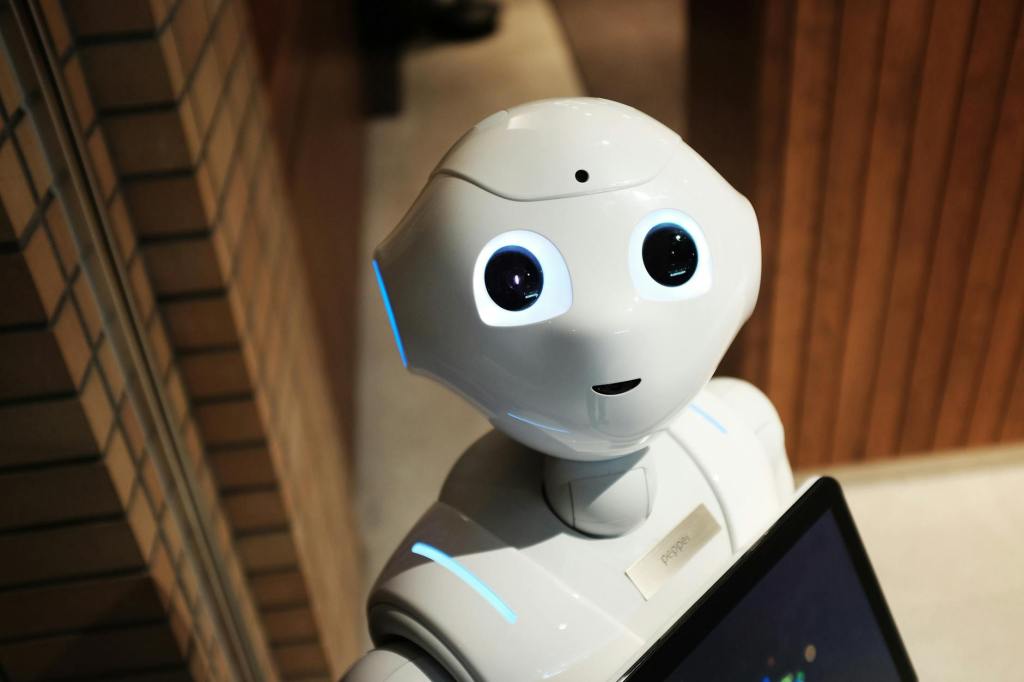
At what point is an artificial intelligence (AI) model actually thinking as opposed to processing and repeating data? This has been an extremely popular question since the advent of computers and artificial intelligence technology; due to rapid advances in AI, this question is being asked more frequently. Back in 1950, an English mathematician named Alan Turing proposed a test that he called “The Imitation Game”, but which has now become known as The Turing Test, as a way “to determine whether a computer can ‘think’” (Britannica Editors).
Fun fact: The Imitation Game is a party game in which “a man and a woman go into separate rooms from the rest of the party. Guests feed them a series of questions and try to determine from the written or typewritten answers which is the man and the woman” (Kekatos).
What is the Turing Test?
Turing’s general thought was this: “if a computer acts, reacts, and interacts like a sentient being, then call it sentient” (Britannica Editors). Or, in other words, if a computer appears to act like it is thinking, then we can say it is thinking. More specifically, Turing’s “aim was to give people a tool for determining machines’ capabilities, particularly when it comes to natural language processing” (Coursera). While the Turing Test is by no means perfect, it is widely used to this day as a benchmark measurement for whether an AI is considered sentient or thinking.
A Turing Test is performed as follows: “a remote human interrogator, within a fixed time frame, must distinguish between a computer and a human subject based on their replies to various questions posed by the interrogator. By means of a series of such tests, a computer’s success at ‘thinking’ can be measured by its probability of being misidentified as the human subject” (Britannica Editors). Once the interrogator has finished questioning both subjects, the interrogator then evaluates the responses based on various metrics, including creativity, empathy, natural language use, ethical considerations, and relevance (Coursera). Once the interrogator finishes going over the responses from the two subjects, they then make their decision as to which is the computer and which is the human. Obviously, “[f]or the test to provide valuable insight into machine intelligence, the human judge must not know which conversational partner is the machine and which is the human”, so a third party, often a computer screen, is used to facilitate communication so the interrogator has no idea which subject is human or computer beforehand (Coursera).
Is the Turing Test Reliable?
The Turing Test is reliable in the sense that it provides data that can be studied and quantified; however, whether it stands as a true benchmark of whether a computer can “think” is still up for debate. Specifically, the main argument against the Turing Test is that it “only helps humans observe how well a machine can produce outputs that are close enough to human conversation so as to be indistinguishable” (Coursera). There are “extreme difficulties in devising any objective criterion for distinguishing ‘original’ thought from sufficiently sophisticated ‘parroting’; indeed, any evidence for original thought can be denied on the grounds that it ultimately was programmed into the computer” (Britannica Editors). Essentially, while the computer may be able to receive questions as input and produce an answer just like a human, this does not mean that it actually “thought” about what it was saying; rather, it analyzed the patterns of letters and words and formulated a response that, by its programming, seems to be a sufficient combination of letters and words. Yet, others argue that this constitutes as “thinking”, albeit in a different way; whenever someone asks us a question, we take time to ponder what they said and then respond based on what we think is sufficient to answer the question.
Whenever he created The Turing Test, Alan Turing “predicted that by the year 2000 a computer ‘would be able to play the imitation game so well that an average interrogator will not have more than a 70-percent chance of making the right identification (machine or human) after five minutes of questioning.’ No computer has come close to this standard” (Britannica Editors). However, with the rapid advancements of AI technology, it is possible that this benchmark might be reached sooner rather than later.
Resources & Further Reading
Britannica Editors. “Turing test”. Encyclopedia Britannica, 18 Dec. 2025, https://www.britannica.com/technology/Turing-test
Coursera. “What Is the Turing Test? Definition, Examples, and How to Conduct Your Own.” Coursera, Coursera Inc, 11 Dec. 2023, www.coursera.org/articles/what-is-the-turing-test.
Kekatos, Mary. “What Is the Turing Test That Determines If Computers Can Think?” ABC News, 21 July 2023, abcnews.go.com/US/turing-test-determines-computers/story?id=101486628.


 The H.A.C.K.E.R. Project
Leave a comment